Cover
The kit’s title page.
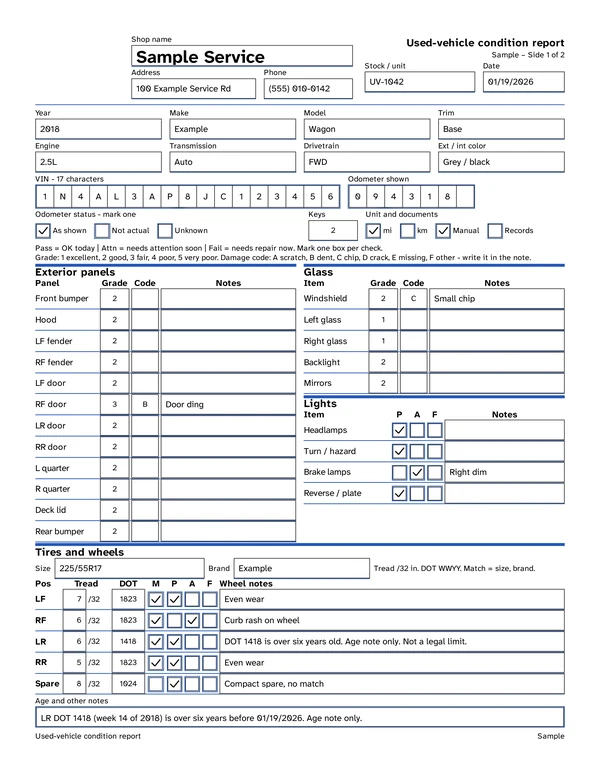 Filled sample, side 1
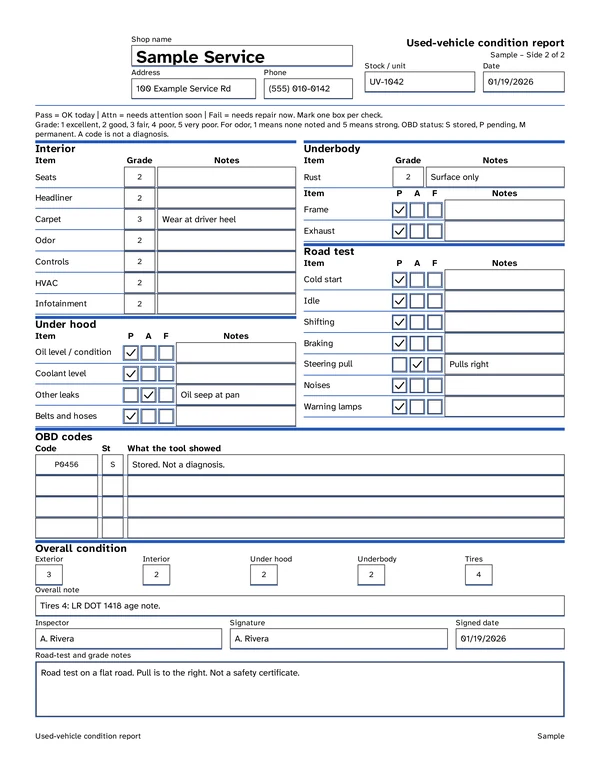 Filled sample, side 2
Two of the kit’s 7 pages, filled in as training samples.
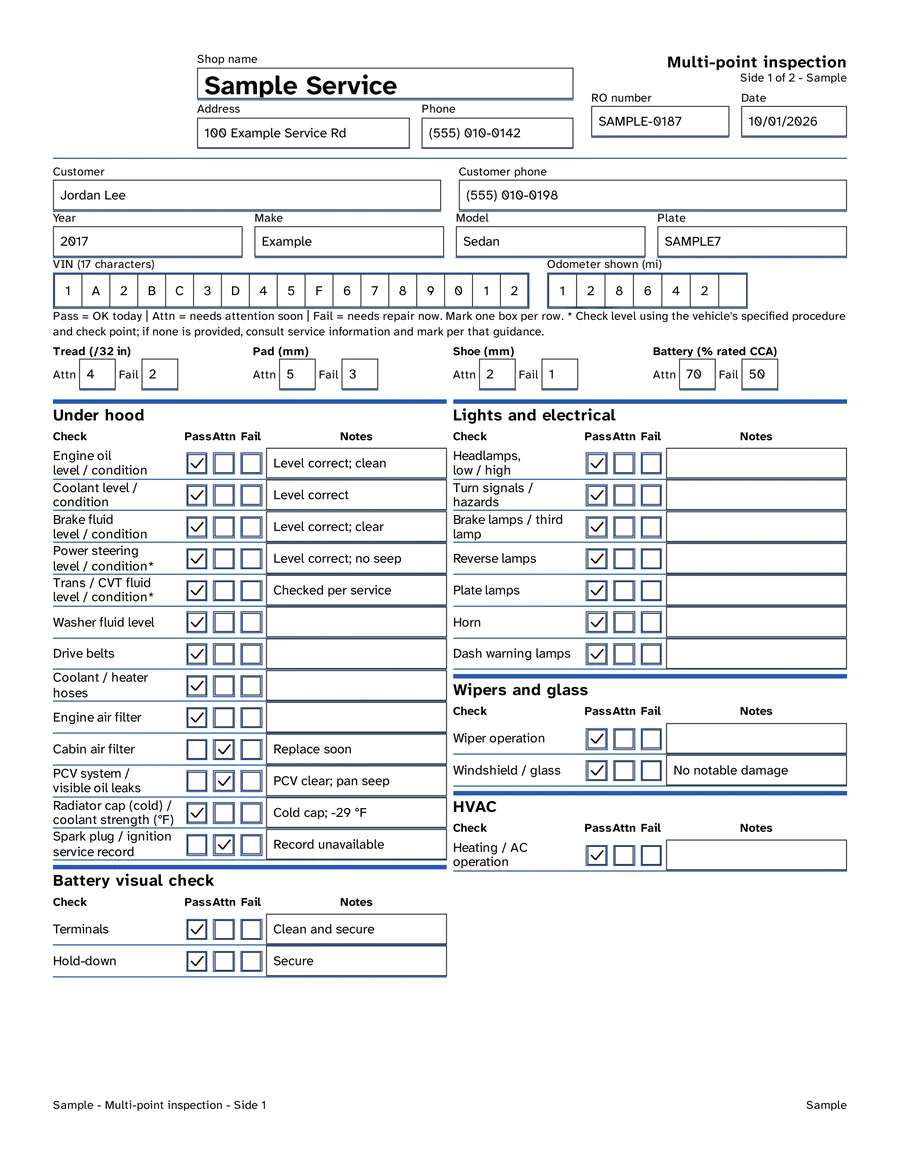
This used vehicle condition report kit writes down the condition of a car before it goes any further: panels, glass, tires, interior, road test and codes. It records condition. It does not put a price on the car.
Pay once at checkout (payment by Stripe Checkout). You land on our thank-you page and the files arrive by email. Nothing is shipped.
Or all three kits for $8.00. Add the multi-point and the rental check-in/out kits for $4.00 more.
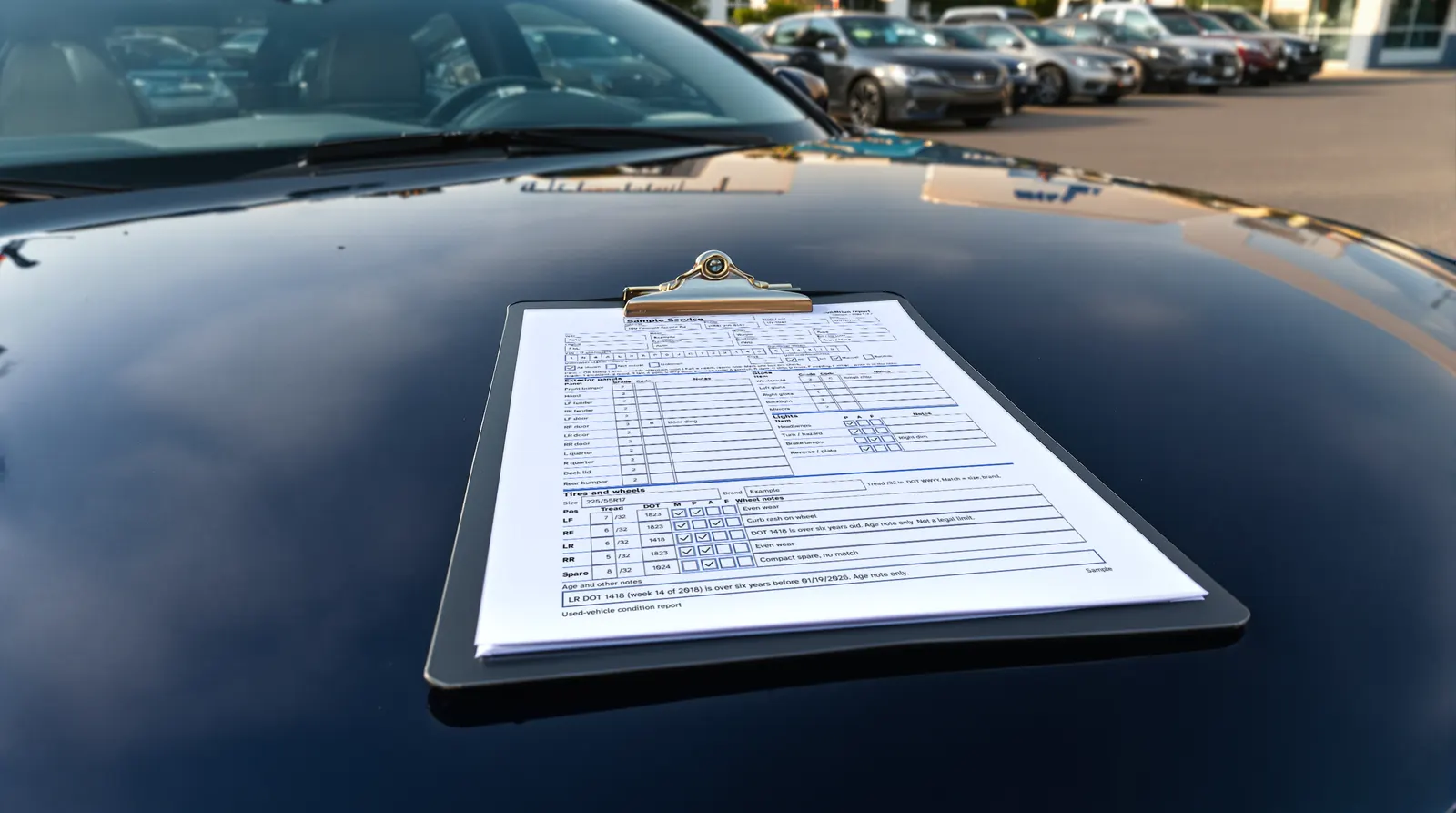
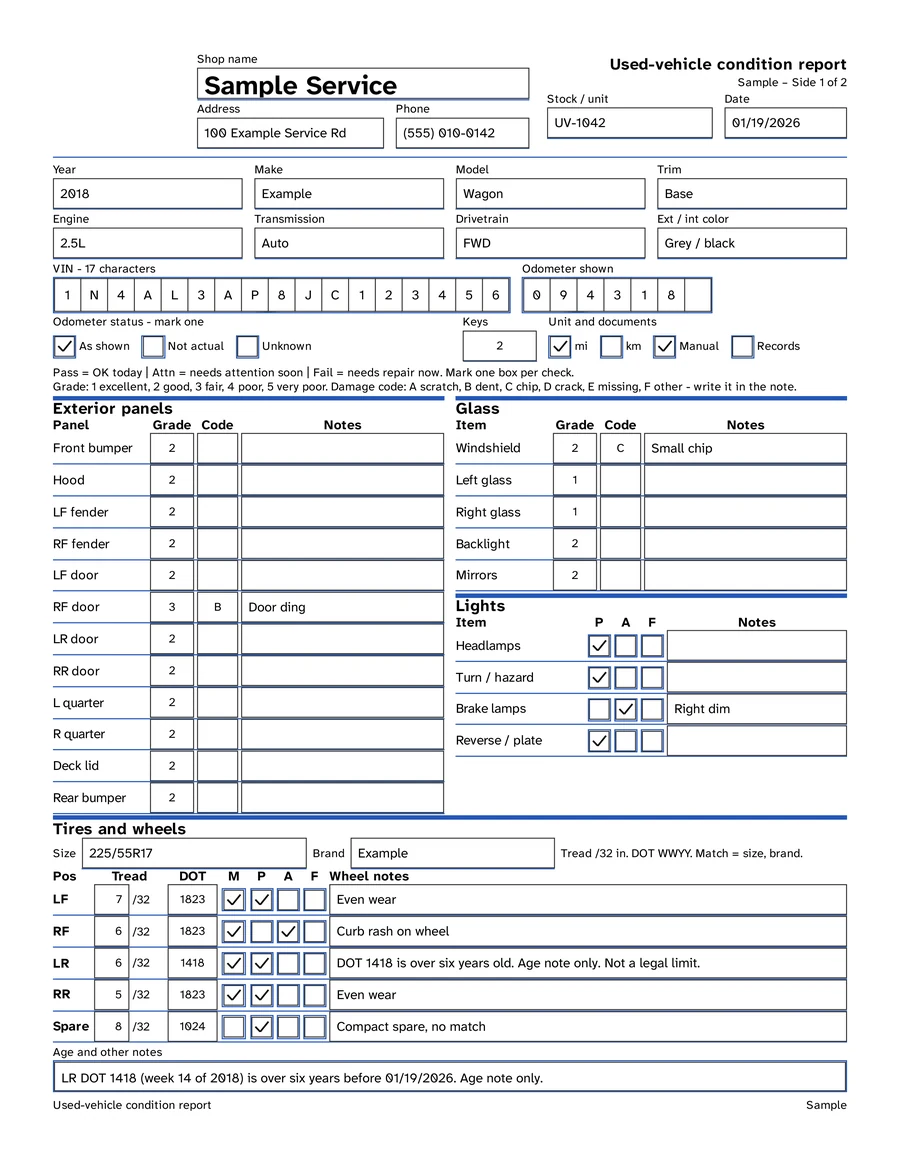
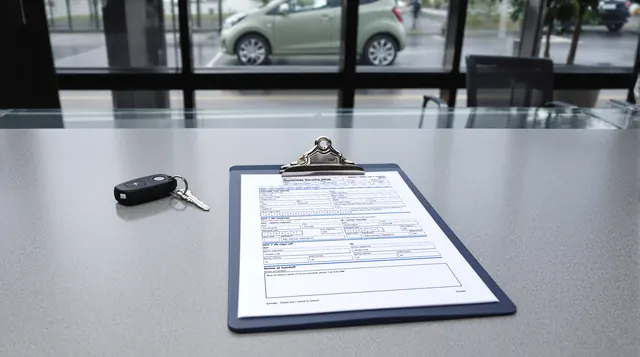
Real sheet: condition report side 1, filled training sample. Scene is an illustration.
Side 1 and side 2 make one double-sided report per vehicle. The reconditioning list goes with the job.
The kit’s title page.
How to grade, which codes to use and which pages to print.
Vehicle details, 17-character VIN and odometer with its status (as shown, not actual, unknown). Exterior panels with grade and damage code, glass, lights, tires with tread and DOT week and year, and wheels.
Interior grades, under hood, rust, frame and exhaust, road test, OBD codes as the tool showed them, overall grades on the printed 1 to 5 scale, inspector name, signature and date.
The work still to do: item, now or soon, parts, hours, estimated repair cost, done and initials. Cost cells stay blank until the shop writes a repair cost.
A worked example for training, including a tire DOT date recorded as an age note.
The matching back, with the road test, a stored code and the overall grades.
A used vehicle condition report records the car’s condition on one date. Every panel is graded 1 to 5 with a damage code. Glass, lights, tires with tread and DOT date, interior, road test and OBD codes follow. It puts no price on the car. The filled sample codes a door ding and notes an old tire.
The bay sheet, the counter sheet and the condition report, with your shop’s name on every page. One checkout, one email with all the files.
On our form: vehicle details, the 17-character VIN, odometer and its status, exterior panels with a grade and damage code, glass, lights, tires with tread and DOT date, wheels, interior grades, under-hood checks, rust, frame and exhaust, a road test, OBD codes, overall grades on a 1 to 5 scale and the inspector’s signature. A reconditioning list on its own page holds the work still to do.
On our form, the grade says it: 1 excellent, 2 good, 3 fair, 4 poor, 5 very poor. Write a 2 for good. Each panel, glass item, tire and interior item gets its own grade, and the overall grades use the same printed scale.
On our form a grade of 4 means poor and a grade of 5 means very poor. Your shop decides where each car falls, and the form records the grade and the damage code. The form does not put a value on the car.
With this kit you walk the car in the order of the report: exterior panels, glass, lights, tires and wheels on side 1, then interior, under hood, rust, frame and exhaust, road test and OBD codes on side 2. Grade each item from 1 to 5 and add a damage code or a note. Finish with the overall grades, then sign and date the report.
No, the report records condition and the work to do, not a price. Repair cost cells on the reconditioning list stay blank until your shop writes a cost. It is not an appraisal.
Write the code, its status (S stored, P pending, M permanent) and what the scan tool showed. The form notes that a code is not a diagnosis.
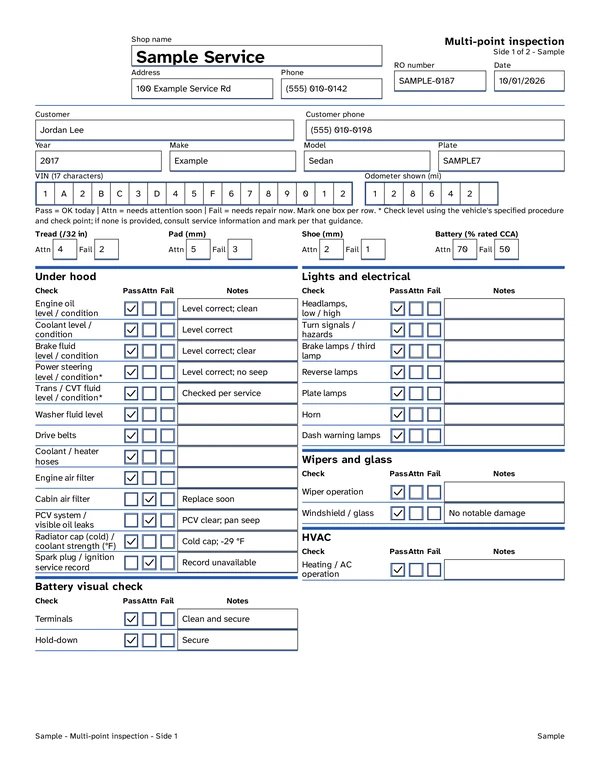
A two-sided multi-point inspection for the bay. A findings and estimate page for the counter. Shop standards you set once.
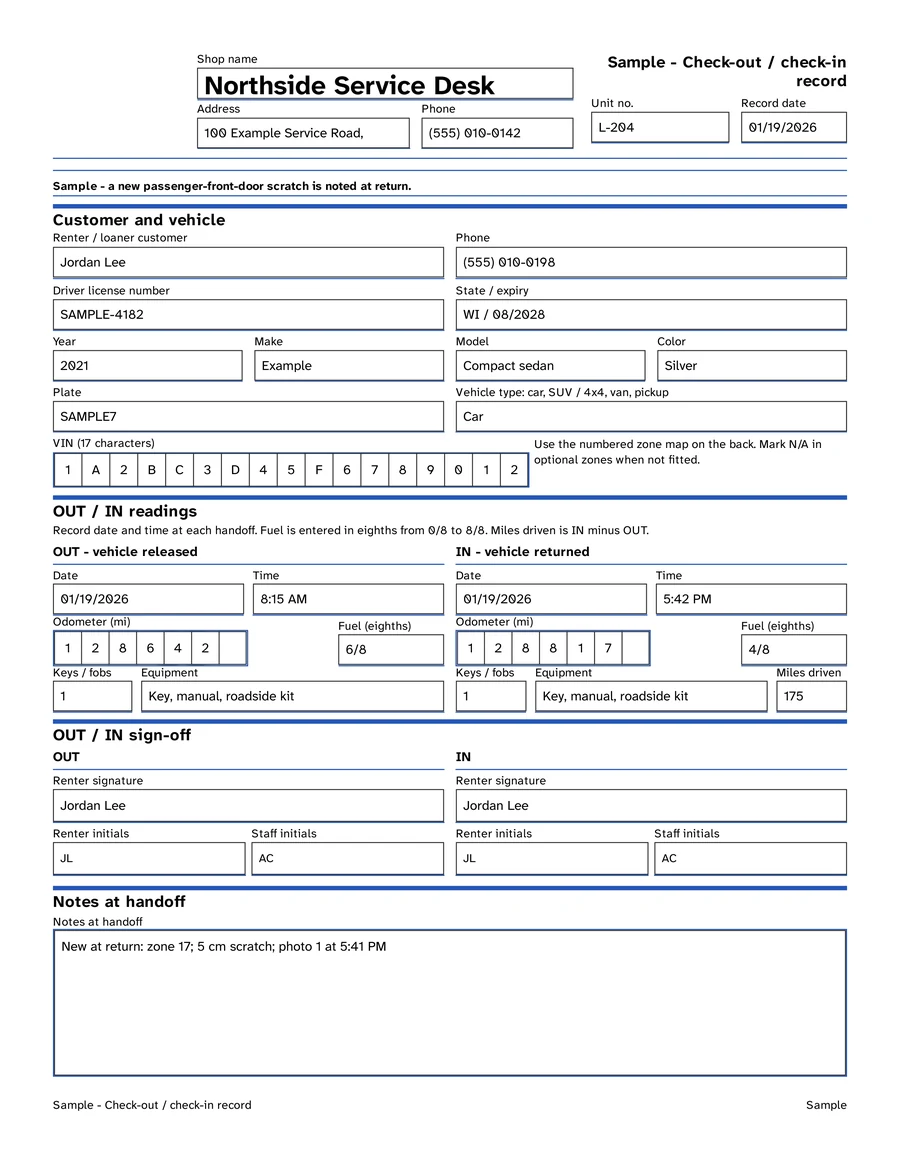
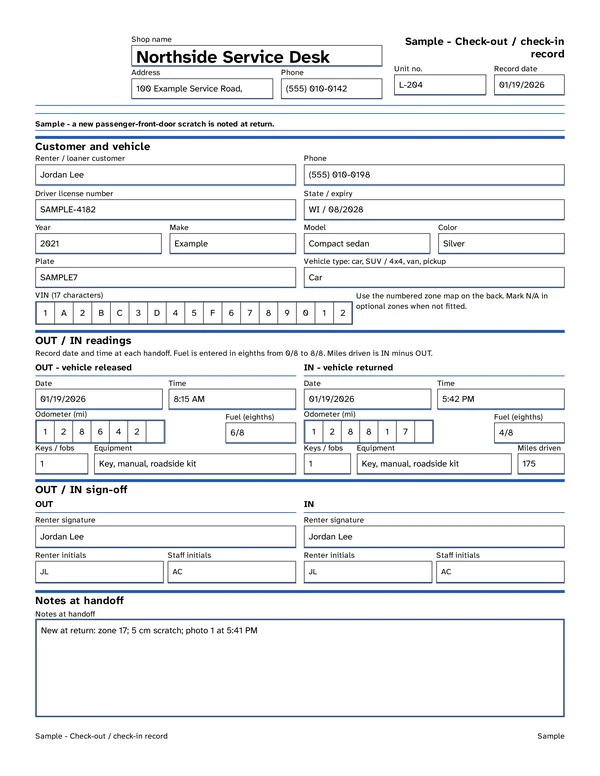
A check-out and check-in record with a zone map. Fill OUT when the keys leave and IN when they come back. For rental and loaner counters.